
Early
Deadline
January 20, 2027
Judging
Date
May 24, 2027
Winners
Announced
June 10, 2027
Wine does not have a marketing problem in the traditional sense. It has a relevance problem. One shaped by generational turnover, economic pressure, and a communications model that no longer reflects how people discover, choose, or live with brands. The conversation today is no longer about how to market wine, rather how to connect with an audience that did not grow up aspiring to wine culture, and does not automatically accept its codes, language, or hierarchies. In a market defined by rising costs, price sensitivity, and intensifying competition from every direction—spanning the likes of RTDs, non-alcoholic drinks, spirits, beer, cannabis and more—marketing has become the primary lever for moving wine off shelves, not a secondary support function.
This shift is happening at the same time that external pressures, such as tariffs, inflation, climate volatility, and the compounding costs of the three-tier system are pushing prices higher; leaving producers and importers with little choice but to raise prices. However amid all this uncertainty, the question is no longer whether consumers will pay more, but whether they feel emotionally justified in doing so? Marketing wine the right way today means building that justification through connection, not explanation.
Tariffs and trade uncertainty have added volatility to already fragile margins. Layer on top the structural inefficiencies of the three-tier system, where every handoff adds cost but often removes narrative, and wine increasingly arrives at retail or on-premise with a price that feels disconnected from its story. Historically, wine relied on prestige, appellation and tradition to bridge that gap. Today, those cues are no longer sufficient on their own. As it has been observed, wine hasn’t lost demand evenly. It has lost alignment. Consumers are still willing to spend, but they are far more selective about when, why and on what. In that environment, marketing is about earning relevance at the exact moment of choice.
For decades, wine marketing assumed that education led to loyalty. Teach consumers about regions, grape varieties, and production, and appreciation would follow. That logic made sense when wine was culturally central and competition was limited. But that world no longer exists and we need to accept the fact and pivot our marketing strategies to adapt better. Today’s consumers, particularly millennials and Gen Z, do not reject wine because they don’t understand it. They disengage when wine fails to fit into their lives naturally. In fact, market trends show that growth is showing up where wine is “easy to say yes to.” This includes the likes of beverages that offer inclusivity instead of compromise, such as RTDs, functional beverages, health-forward drinks, and more.
Social Media: Showing Use, Not Status
Social media has become wine’s most visible cultural interface, and one of its most misused. Too often, brands treat it as a digital shelf: bottle shots, tasting notes, awards. What resonates instead is usage. Wine at dinner. Wine at concerts. Wine on flights, at sporting events, at casual gatherings. The brands gaining traction use social platforms to demonstrate how wine fits, not why it’s superior. This aligns with a broader shift: consumers don’t follow linear purchase funnels anymore. They move through a “messy middle,” encountering brands through moments, not messages.
Influencer Marketing: Credibility Over Reach
Influencer marketing works when it feels like trust transfer, not paid endorsement. Smaller creators with genuine cultural alignment often outperform high-reach campaigns because their recommendations feel human. The key is not wine expertise, but relevance. Creators who already embody moderation, sustainability, creativity, or hospitality lend credibility that traditional wine authority no longer commands on its own.
Events, Pop-Ups, and Experiences: Wine as a Social Object
Whether in tasting rooms or temporary activations, experience now matters more than instruction. Younger consumers consistently respond to environments that feel casual, flexible and social. This mirrors what we’re seeing across on-premise and DTC: wine performs best when it behaves less like a subject and more like a shared experience.
One of the most persistent myths in wine marketing is that innovation undermines the core category. In reality, innovation is often what keeps wine culturally present. Alternative formats such as cans, half-bottles, single-serve packaging allow wine to enter occasions it historically missed: travel, festivals, solo drinking, mid-week moments. Lower-alcohol and non-alcoholic wines allow consumers to maintain rituals even when moderating. These products function as continuity tools, keeping wine relevant across different contexts and life stages.
Modern wine marketing also demands clarity. Ingredients, sourcing, alcohol levels, and sustainability practices are no longer optional disclosures. Transparency builds trust and trust supports price resilience. That trust is reinforced when brands focus on small, clearly defined audiences rather than broad, generic appeal. Catering to the smallest viable market allows for consistent hospitality, repeat purchases, and organic advocacy. Scale succeeds relevance, not the other way around. Values matter here, especially for Gen Z, but only when they are visible and actionable. Sustainability resonates when consumers can see impact, participate in it, and understand it intuitively. Abstract claims no longer move the needle.
If price pressure has exposed wine’s vulnerability, it has also clarified what producers can no longer afford to outsource: communication. In a market where cost increases are unavoidable, value must be made visible, intelligible, and emotionally credible to the consumer. The most effective wine marketing today does not attempt to compete on scale or nostalgia. It competes on clarity. Producers who succeed are those who can articulate, simply and consistently. Why this wine exists? Who it is for? When does it fit? That message must travel intact across the supply chain, from producer to retailer and on-premise staff, without relying on appellation shorthand or assumed knowledge to do the work. This begins with stripping the story back to its essentials. Instead of leading with classification or technical hierarchy, producers are finding traction by foregrounding human decisions: why this site was chosen, why yields were limited, why a particular fermentation or ageing choice matters to flavour and drinkability. These are not simplifications; they are translations. They turn complexity into context rather than instruction.
Crucially, connection is no longer built only at the bottle. Digital touchpoints—producer-led content, short-form video, QR-enabled back labels, and direct-to-consumer communication—now play a decisive role in shaping perception before a purchase is made. When used well, these tools do not replace the trade; they reinforce it by giving consumers confidence and curiosity before they ever reach the shelf or list.
On-premise, alignment depends on usability. Wines that come with clear serving cues, pairing logic, and narrative flexibility are easier for staff to recommend and easier for guests to say yes to. In an environment where attention is fragmented and menus are crowded, wines that reduce friction outperform those that demand explanation.
Ultimately, rebuilding relevance is not about louder storytelling, but about more intentional storytelling. Wine does not need to abandon its depth, but it does need to meet consumers where they are—time-poor, choice-rich, and value-conscious. When producers take ownership of that conversation, price becomes contextualised rather than questioned, and wine regains not just visibility, but legitimacy at the point of decision.
Wine is not broken. But it can no longer rely on cultural inertia to do the work that marketing must now do deliberately. In an era of rising prices, structural inefficiencies, and generational change, marketing wine the right way means shifting from awareness to belonging. From explanation to invitation. From authority to relevance. The future of wine will not be decided by who protects the past most fiercely, but by who earns a place in modern lifestyles most naturally.
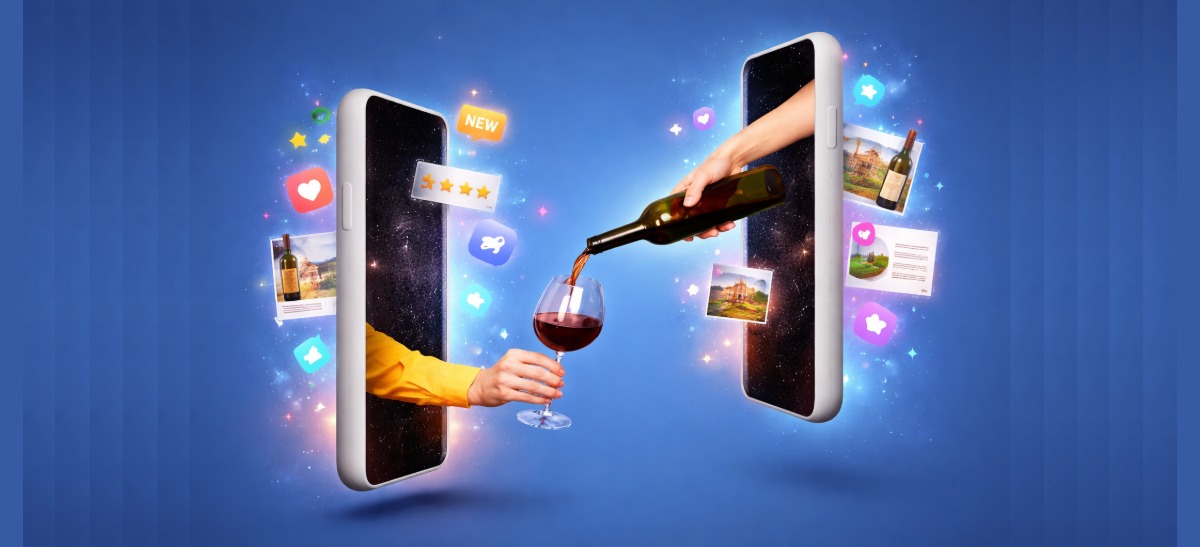
Header image sourced from Adobe Express.
Enter the 2027 Sommeliers Choice Awards for expert evaluation from sommeliers and on-premise wine buyers. Receive detailed scores, practical feedback on how to improve, market and sell your wines, and see who judged them—with insights into channel fit and serving suggestions.