
Early
Deadline
January 20, 2027
Judging
Date
May 24, 2027
Winners
Announced
June 10, 2027
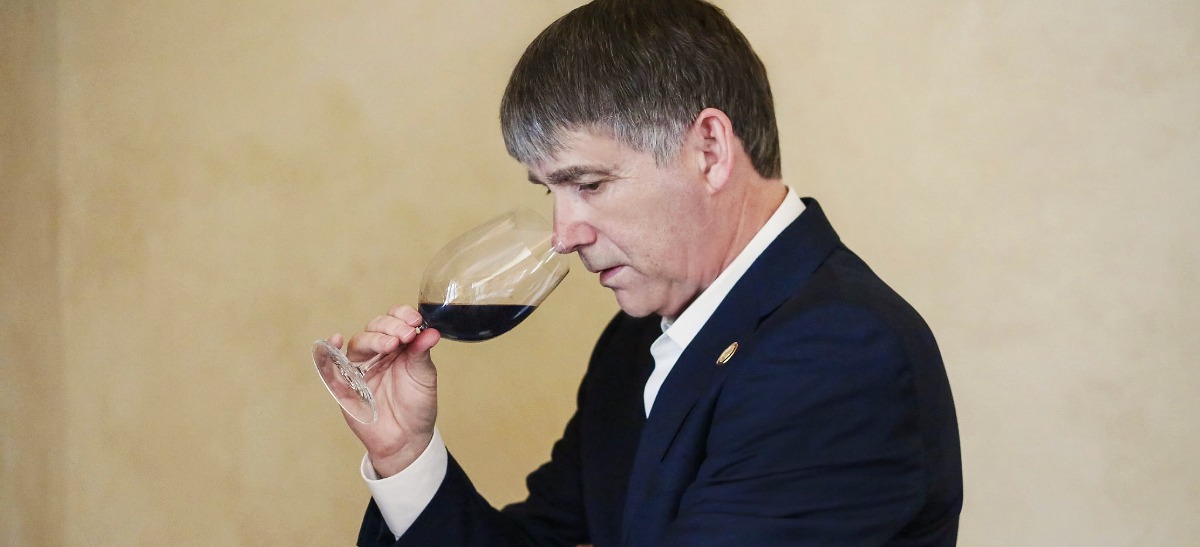
Tim Gaiser is an internationally renowned wine expert, educator, writer, and blogger. He is one of less than 300 individuals worldwide to ever attain the elite Master Sommelier title. Gaiser is the former Director of Education and Education Chair for the Court of Master Sommeliers, Americas, and instructor for the Napa Valley Wine Academy. Over his 30-plus year career, Tim has taught thousands of students in wines and spirits classes at every level as well as developing education programs for restaurants, winery schools and wine distributors. He has experience in all phases of the wine industry: online, wholesale, retail, winery, and restaurants. Gaiser has written for a number of publications including Fine Cooking Magazine and the Somm Journal and also writes for numerous wine and spirits clients. He has served as the author and lead judge for the Best Young Sommelier Competition and the Top Somm Competition. His new book, “Message in a Bottle: A Guide to Tasting Wine,” was published in 2022 and quickly became one of the top resources for students in wine certification programs. Prior to developing his wine expertise, Tim pursued his M.A. in Classical Music, after which he played classical trumpet as a freelance professional and as an extra with the San Francisco Opera Orchestra.
Edited excerpts from the interview.
Wine was never a planned career. I have two degrees in music. While getting my master’s in classical trumpet at the University of Michigan in Ann Arbor, I bartended at two restaurants that had outstanding wine lists, which is when I was bitten by the wine bug. After finishing school, my wife Carla and I moved to San Francisco. There I played freelance with local orchestras for the first several years while also beginning to read about and collect wine. From there, a series of bartending jobs eventually led to working as a sommelier. Around this time I learned about the Master Sommelier program and went through the curriculum, passing the final exam in March of 1992.
The tasting was, by far, the most difficult part of the exams for me. At the time I considered myself to be a complete amateur when it came to tasting. It didn’t make sense to me for a long time. However, I was fortunate to be in a study group with three other brilliant tasters—Peter Granoff, Steve Morey, and the late Michael Bonacorsi. It’s thanks in large to their help that I finally clicked with the tasting method and was able to pass the exam.
Not thoroughly knowing the tasting grid. Regardless of what wine certification you’re pursuing, you absolutely must know the tasting grid to the extent that when you’re working through a wine, you always know what’s next. While it takes a lot of tasting practice, it takes far more mental rehearsal using a tasting grid until it becomes second nature. At that point, the grid becomes a security blanket in an exam because you know it so well.
A lot of the tasting experience is perception, recognition, and memory. That being the case, practice going through memories of the best examples of classic wines you’ve ever tasted. Do that 10-times more than actually tasting. You’ll build recognition and memory much faster.
Above all, the list has to make money for the restaurant. Any list then is a combination of wineries/brands that are recognizable to diners, and wines that you personally want to introduce to guests and sell. Also, the list has to be user-friendly for the floor staff. They should be able to navigate it without you on site. If not, you either have to be on the floor at all times or nothing sells.

Tim Gaiser, Master Sommelier
Austrian Riesling, Alto Adige red wines—Schiava and Lagrein, and Etna Rosso are current favorites.
Pinot Blanc, especially Pinot Bianco from Alto Adige, is a great white wine by the glass and versatile with food.
Pairing sparkling wine or Champagne with an entrée vs. using it with a starter. For example, rosé Champagne paired with salmon in parchment.
Learn as many aspects of the front of the house as you can. The age of a dedicated sommelier position may be a thing of the past—at least for now. Thus any sommelier job now will almost always involve other responsibilities.
Robert Weil Kiedricher Gräfenberg Beerenauslese Goldkapsul.
Several thoughts. If you are pursuing a sommelier certification, think of it as a process. With tasting, know that there will be some days when your palate works better than others. Regardless, you’re trying to raise the bar with practice so that on any given day you can taste well enough to pass an exam. It’s just like taking auditions. As for theory, continually remind yourself to separate the information you already know—and are reviewing—against new information that you are learning and moving into long-term memory. Otherwise, your brain will generalize and all the information will seem overwhelming. Finally, with theory study, think in terms of 45-minute modules and not hours studied. Shorter periods for theory with breaks in between work better for learning .
Header image sourced from Tim Gaiser (Website).
Enter the 2027 Sommeliers Choice Awards for expert evaluation from sommeliers and on-premise wine buyers. Receive detailed scores, practical feedback on how to improve, market and sell your wines, and see who judged them—with insights into channel fit and serving suggestions.