
Early
Deadline
January 20, 2027
Judging
Date
May 24, 2027
Winners
Announced
June 10, 2027
Over the past two decades, I've had the opportunity to work with thousands of wineries, importers, distributors, restaurant buyers, and beverage professionals through our competitions, trade shows, media platforms, and buyer networks. One pattern has become increasingly clear: many wineries still approach multi-unit hospitality groups the same way they approach independent restaurants.
That approach rarely delivers the best results.
Multi-unit hospitality groups operate differently. Their buying decisions are driven not only by the quality of the wine, but also by operational consistency, supply reliability, pricing architecture, staff training, distributor capabilities, and long-term supplier partnerships. They are looking for wines that work across an entire business, not just on an individual wine list.
For wineries looking to expand their presence in the on-premise channel, understanding how these organisations evaluate suppliers can be one of the biggest competitive advantages. This article shares some of the key lessons I've observed from working with hospitality buyers and speaking with beverage directors across restaurant groups, hotels, and hospitality businesses over the years.
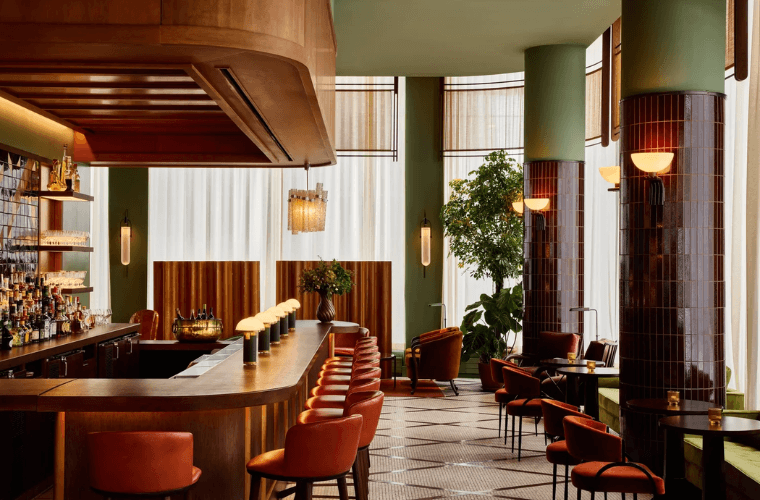
Image of one of the locations of Union Square Hospitality Group
Multi-unit hospitality groups are companies that own, operate, or manage multiple restaurants, bars, hotels, resorts, clubs, or entertainment venues under one central organisation.
They may operate one concept across many locations, such as a national steakhouse or casual dining chain. Others manage a portfolio of different concepts, including fine dining restaurants, neighbourhood venues, hotel bars, rooftop spaces, private clubs, and event-driven hospitality businesses.
The category can include:
- National and regional restaurant chains
- Luxury hotel groups
- Boutique hotel operators
- Resort and casino groups
- Premium steakhouse groups
- Multi-concept restaurant companies
- Airport and travel hospitality operators
- Private club groups
- Catering and contract hospitality companies
- Entertainment and lifestyle venue operators
What makes these businesses important is their scale. A buyer may not be choosing a wine for one venue. They may be evaluating whether it can work across five, twenty, fifty, or even hundreds of locations.
That changes the entire buying conversation.
Independent restaurant listings remain valuable, particularly for brand building, visibility, and local influence. However, they can require considerable time and account support while generating relatively limited volume.
Multi-unit groups offer the potential for wider distribution from a single commercial relationship.
A wine may begin with a trial in a small number of venues. If it performs well, the listing can be expanded across the group. This creates the possibility of predictable reorders, stronger distributor commitment, and more efficient account management.
For international wineries, a multi-unit account can also provide an important platform for entering or expanding within the U.S. market. A recognised hospitality listing can improve credibility with importers, distributors, other buyers, and consumers.
The opportunity is significant, but the level of scrutiny is also higher. Multi-unit operators need wines that can perform commercially and operationally at scale.
One of the first challenges is identifying who actually controls the purchasing decision.
In smaller groups, the decision may sit with the owner, wine director, or beverage director. In larger organisations, several stakeholders may be involved.
Typical decision-makers include:
- Corporate Beverage Director
- Group Wine Director
- National Beverage Director
- Vice President of Food and Beverage
- Head Sommelier
- Category Manager
- Procurement Director
- Beverage Development Manager
- Regional Beverage Manager
- Executive Chef
- General Managers
- Individual Venue Beverage Managers
In some groups, buying is highly centralised. The corporate team selects the portfolio, negotiates pricing, and controls supplier approval.

Image: Steven Minor, Corporate Beverage Director at Starwood Hotels (left) and Lyndsi Hastings Mundy, National Corporate Beverage Director at Riot Hospitality Group (right) - both are judges at the Sommeliers Choice Awards
In others, the process is hybrid. A central team may create an approved supplier list, while regional or venue-level teams choose from within that portfolio.
Hotels can be particularly complex. The hotel group may establish broad beverage standards, but individual properties may retain some freedom based on location, clientele, and restaurant concept.
Before pitching, suppliers should understand:
- Who has final approval?
- Who influences the decision?
- Is the buying process centralised or local?
- Does procurement control pricing?
- Does the beverage team control the final selection?
- Is the distributor already approved?
- Does the group require a formal vendor onboarding process?
A strong pitch to the wrong person rarely moves forward.
Quality remains essential, but it is only the starting point.
Multi-unit buyers are trying to build beverage programs that are commercially successful, easy to operate, and consistent across locations. They are therefore assessing the wine, the supplier, the distributor, and the implementation plan at the same time.
They want to know whether the wine can sell, whether the staff can explain it, whether the margins work, whether supply is reliable, and whether the supplier can support the account after launch.
The most successful pitches address these questions directly.
1. Reliable Supply At The Required Scale
A multi-unit buyer needs confidence that the wine will remain available.
A small allocation may work for a single fine dining venue, but it is unlikely to suit a national or regional group unless scarcity is part of the strategy. Buyers need to understand production volume, current inventory, future vintage availability, and the winery’s ability to support expansion.
Suppliers should be prepared to answer:
- How many cases are currently available?
- How much can be allocated to the account?
- Can supply be maintained throughout the year?
- What happens during a vintage transition?
- Can volumes increase if the trial performs well?
- Where is the stock held?
- How quickly can replenishment reach each market?
Running out of stock after a successful launch can damage confidence and disrupt the entire beverage program.
2. Consistent Quality And Style
Consistency matters because multi-unit groups are selling a repeatable guest experience.
A guest ordering the same wine in two different locations should receive a broadly consistent experience. Buyers understand vintage variation, but they still expect the wine’s core style, quality, and positioning to remain recognisable.
This is particularly important for by-the-glass programs, where staff are trained around a specific taste profile and guests may reorder the wine across multiple visits.
Wineries should explain how they maintain house style, manage vintage variation, and communicate changes before the next vintage is introduced.
3. Commercial Pricing That Works Across The Group
Multi-unit groups are highly focused on beverage margins and menu pricing.
They evaluate the landed cost, wholesale cost, suggested menu price, by-the-glass economics, distributor margin, and guest value. A wine may be excellent, but if the pricing does not fit the group’s architecture, the listing becomes difficult.
Suppliers should understand how the wine performs at the intended price point.
For example:
- What is the likely bottle price on the list?
- What is the expected glass price?
- Does the wine fit an existing pricing gap?
- Can the restaurant maintain its target pour cost?
- Does the guest receive clear value?
- Is there enough margin for both the distributor and operator?
The strongest pitches show that the supplier understands restaurant economics, not just the ex-cellar price.
4. Staff Training And Account Support
A listing does not sell itself.
Multi-unit buyers need confidence that the supplier can help staff understand, recommend, and sell the wine. This is especially important when the wine involves an unfamiliar region, grape variety, production method, or style.
Support may include:
- In-person staff training
- Virtual training sessions
- Tasting notes
- Food-pairing guidance
- Short selling points
- Menu descriptions
- Point-of-sale materials
- Winemaker appearances
- Launch events
- Educational videos
- Digital training assets
The best supplier materials are simple, practical, and designed for front-of-house teams. Staff rarely need a long technical presentation. They need to know how to describe the wine quickly, who it is for, what food it pairs with, and why the guest should order it.
5. Strong Importer And Distributor Coverage
Most multi-unit groups prefer to work through established distribution partners.
The distributor needs to be capable of servicing all relevant markets, maintaining stock, handling invoicing, resolving delivery issues, and supporting account management.
For a national group, this may require a distributor with broad multi-state coverage. For a regional group, the requirement may be more focused, but reliability remains critical.
Wineries should be ready to explain:
- Who imports the wine?
- Which distributors carry it?
- Which states or regions are covered?
- Where is inventory held?
- Can the distributor service all locations?
- Is the brand already approved with the group?
- Who will manage the account after the listing?
In many cases, the buyer is assessing the distribution solution as closely as the wine itself.
One of the most common mistakes is presenting the same generic winery deck to every buyer.
A strong multi-unit pitch should be tailored to the group’s concepts, menus, price points, guest profile, and current beverage strategy.
Before the meeting, suppliers should research:
- Number of venues
- Geographic footprint
- Restaurant concepts
- Menu styles
- Existing wine list
- Current by-the-glass program
- Typical bottle price points
- Sustainability commitments
- Supplier partnerships
- Recent beverage launches
- Growth plans
The pitch should explain where the wine fits and why it adds value to the current program.
Instead of saying:
“This is our award-winning Cabernet Sauvignon.”
A stronger commercial pitch would be:
“This wine can fill the premium by-the-glass Cabernet position across your steakhouse locations, deliver your target margin at the proposed menu price, and be supported with regional staff training and consistent year-round supply.”
That is a business solution, not simply a product presentation.
Multi-unit buyers need clarity.
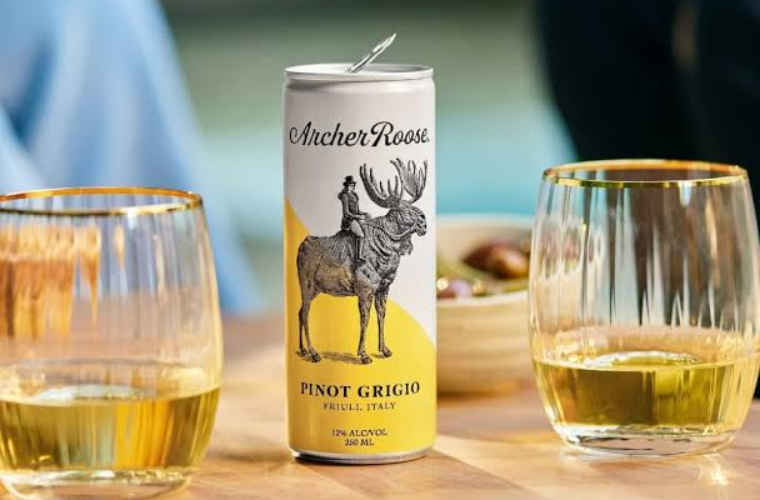
Here is a great article on how our winner, Archer Roose is building their presence in the US market and focusing on multi-unit on-premise chains
They want to know whether the wine is suited to:
- By-the-glass service
- Bottle-only placement
- Premium bottle listings
- Banquets and events
- Hotel minibars
- Pool and resort programs
- Corporate dining
- Seasonal menus
- Luxury properties
- Casual concepts
- Steakhouses
- Seafood restaurants
- Wine bars
- Rooftop venues
The supplier should also identify the strongest geographic or concept fit.
A wine may not be suitable for every venue in the group, but it may be highly effective in one particular concept. A focused proposal is often more credible than asking for a system-wide rollout immediately.
Multi-unit buyers need more than tasting notes.
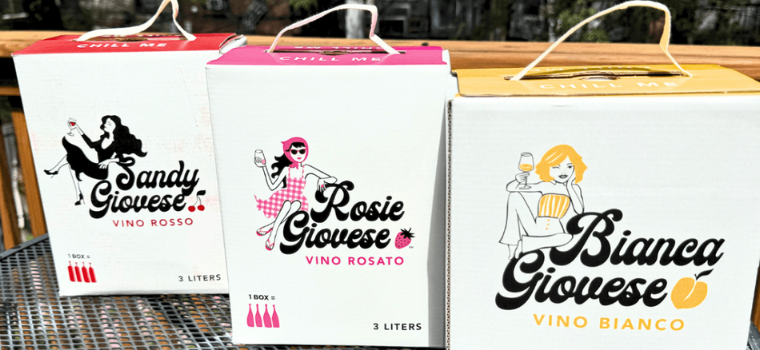
Taking the top honor in 2026 is Sandy Giovese from Giovese Family Wines (Italy), which earned an impressive 96 points and was named the Top Recommended Wine By The Glass at this year’s competition. They are focusing on the on-premise chains, giving them a huge margin play and quality for their by-the-glass programs.
A professional pitch should include:
- Wholesale and landed pricing
- Suggested menu pricing
- Target pour cost
- Expected bottle margin
- Available inventory
- Annual production
- Vintage continuity
- Market coverage
- Distributor information
- Training support
- Launch support
- Food-pairing opportunities
- Channel fit
- Service recommendation
- Packaging dimensions if operationally relevant
- Sustainability credentials
- Previous on-premise performance
Where possible, include evidence.
That may include sales from similar accounts, successful by-the-glass placements, reorder rates, staff engagement, menu performance, or comparable hospitality listings.
Buyers are more likely to approve a wine when the commercial case is clear and supported.
Many groups will not begin with a full national placement.
They may test the wine in a small number of locations, one region, or one concept. This gives the buyer an opportunity to assess sales performance, guest response, staff adoption, supply reliability, and supplier support.
Wineries should welcome this process.
A successful trial can create a pathway to wider distribution, while also providing valuable learning. During the trial, suppliers should closely monitor:
- Sell-through
- Reorder frequency
- Staff feedback
- Guest response
- Best-performing locations
- Food-pairing success
- Pricing resistance
- Operational challenges
The goal is not simply to win the first listing. It is to prove that the wine can perform and earn expansion.
Multi-unit buyers often review large numbers of products.
A pitch that presents fifteen or twenty wines without a clear recommendation can create unnecessary work for the buyer. It is usually better to lead with a tightly selected portfolio.
Present the wines most relevant to the group and explain the role each one could play.
For example:
- One core by-the-glass wine
- One premium bottle listing
- One seasonal or regional point of difference
This demonstrates commercial judgment and makes the decision easier.
The strongest suppliers plan for the entire account lifecycle.
After approval, there may be staff training, menu launches, distributor coordination, inventory planning, local activation, and performance reviews.
Suppliers should establish clear responsibilities:
- Who manages the buyer relationship?
- Who coordinates with the distributor?
- Who schedules training?
- Who monitors inventory?
- Who supports individual venues?
- Who provides marketing assets?
- Who reviews performance?
A listing can quickly lose momentum when no one owns the relationship after the launch.
Learn Which Buyers Are Shaping The Market

Understanding the structure of multi-unit hospitality groups is important, but so is identifying the people responsible for shaping their beverage programs.
For a closer look at influential decision-makers across leading restaurant and hospitality organisations, read Top Multi-Unit Hospitality Group Buyers To Watch In 2026.
The article highlights buyers overseeing wine and beverage programs at scale and provides useful context for wineries looking to better understand this important part of the U.S. on-premise market.
Understanding how multi-unit hospitality groups buy is one thing. Understanding how your own wines are likely to perform within those channels is another.
For many wineries, questions such as Which type of venue is this wine best suited for? Would it work more effectively by the glass or by the bottle? Does it deliver the right value at its intended price point? How should it be positioned to restaurant buyers? are difficult to answer internally.
This is where the Sommeliers Choice Awards provides value beyond medals.
Every wine is evaluated by experienced sommeliers, beverage directors, restaurant wine buyers, and hospitality professionals who assess not only quality, but also commercial relevance within the on-premise market.
As part of every entry, wineries receive practical insights, including:
- How To Improve This Wine
- How To Market & Sell This Wine
- Channel-Fit Recommendations
- Service Recommendations — By the Glass, Bottle, or Both
Complimentary access to the Sommeliers Choice Awards Buyer Market Intelligence Report
These insights can help wineries strengthen sales presentations, support distributor teams, identify suitable hospitality channels, and improve their approach to restaurant and multi-unit accounts.
For wineries looking to grow restaurant listings, expand U.S. distribution, or increase their share of the on-premise market, the Sommeliers Choice Awards offers both recognition and practical commercial intelligence from the professionals who influence buying decisions every day.
Wineries that enter 10 or more wines by August 31 will receive a complimentary list of 50 matched U.S. wine buyers and on-premise decision-makers.
Our team will curate a buyer list relevant to your wines, including contacts such as:
- Restaurant Wine Buyers
- Sommeliers
- Beverage Directors
- Hotel Beverage Managers
- Multi-Unit Hospitality Buyers
- Importers
- Distributors
- Wine Program Directors
The list includes company names, buyer names, job titles, and contact details to help support your U.S. sales and business development efforts.
Combined with the competition's commercial feedback, Channel-Fit Recommendations, Service Recommendations (By the Glass, Bottle, or Both), and the Buyer Market Intelligence Report, this gives participating wineries practical tools to help grow their presence in the U.S. on-premise market.
Entries are now open. Wineries looking to win more restaurant listings and strengthen their U.S. market presence are encouraged to enter before August 31, 2026.
Once you have entered 10 or more wines before August 31, our team will contact you to understand your export and sales objectives.
Based on your wines and target market, we will prepare a custom list of 50 matched U.S. buyers to help you identify the most relevant opportunities for your business. The list may include buyers from restaurants, hotel groups, multi-unit hospitality companies, importers, distributors, and other on-premise channels aligned with your portfolio.
Sid Patel is the CEO & Founder of Beverage Trade Network and the creator of the Sommeliers Choice Awards, London Wine Competition, USA Wine Ratings, Bartender Spirits Awards, and the International Bulk Wine & Spirits Show (IBWSS). Over the past 20 years, he has worked with thousands of wineries, importers, distributors, retailers, and hospitality buyers worldwide, helping beverage brands better understand buyer behaviour and build stronger routes to market.
Through the Sommeliers Choice Awards, Sid continues to work closely with sommeliers, beverage directors, restaurant buyers, and hospitality professionals to provide wineries with practical commercial insights that support growth in the global on-premise market.
Also Read:
Coming Home to Abruzzo: The Family Story Behind Cantina di Rosina
Tomillar: How Europe's Largest Winery Continues to Redefine Value at Scale
Where the Wind Does the Hard Work: StarWine Cellars and the Rise of the Petaluma Gap
Enter the 2027 Sommeliers Choice Awards for expert evaluation from sommeliers and on-premise wine buyers. Receive detailed scores, practical feedback on how to improve, market and sell your wines, and see who judged them—with insights into channel fit and serving suggestions.