
Early
Deadline
January 20, 2027
Judging
Date
May 24, 2027
Winners
Announced
June 10, 2027

The wine industry is experiencing one of its most challenging periods in recent years. Consumer behaviour is changing, traditional categories are under pressure, and wineries are being forced to examine where future growth will come from.
Sparkling wine, however, continues to offer opportunity. In a conversation with Beverage Trade Network CEO Sid Patel, Rack & Riddle CEO Jeff Tuttle, and Chief Commercial Officer and General Manager Mark E. Garaventa discussed why sparkling wine remains a major focus for their business and how wineries can use innovation, consumer insights, and market white space to build growth.
For producers considering entering the 2027 Sommeliers Choice Awards, the discussion also highlights an important commercial question: Is your sparkling wine positioned for the way today’s consumers drink, and the way restaurants, hotels and other on-premise buyers serve wine?
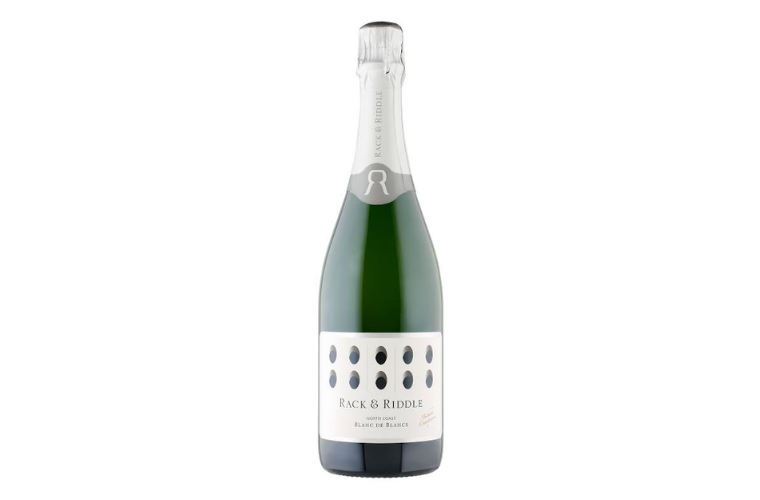
Rack & Riddle is a leading custom sparkling wine producer, helping wineries develop and produce traditional-method, Charmat, canned, and alcohol-removed sparkling wines. Its leadership team sees sparkling wine as a major growth opportunity as consumers embrace new styles, formats, and drinking occasions.
Jeff Tuttle: Like us, I think any of the industry participants are going to need to rely on innovation. I think we’ve heard a lot of that discussion at the various industry gatherings—that innovation is key.
So, I think whether you’re in sparkling or still wine, red wine, white wine, whatever, there are things like alcohol-removed products and different packaging that are innovations that meet consumers in a new way. We’re hearing from a lot of our winery partners—and we have a lot of them—that they’re doing that. We’re playing a role for them that way.
Mark E. Garaventa: I think what it is for the still-wine wineries is obviously, like you mentioned, the innovation piece, but also catering to the new generation—Gen Z and Millennials. They’re up-and-coming. They are going to be the customers of the future, and how are wineries addressing that within their own business?
Jeff Tuttle: Frankly, no. We’re very satisfied with the focus we have on sparkling. We’ll do some still-wine things and bottle for people, but the big growth driver for us is sparkling, and there’s so much opportunity there for us and really for all of our partners.
We have plenty to do to achieve our goals, and consumers are agreeing with that, whether it’s simply doing more sparkling at some of these wineries or doing different sparkling things like alcohol-removed products or our CalSecco product, which goes after a California version of Prosecco. Those kinds of things—sparkling will be where we can focus to achieve our goals.
Mark E. Garaventa: All businesses go through peaks and valleys, and the wine industry has certainly been in a valley for the last couple of years. I think we’re going to come out of this. I think it’s going to be a different landscape than it has been in the past, but I think there’s still plenty of opportunity.
As Jeff mentioned, we’re doing CalSecco. We’re doing flavoured products, and not just sweet flavoured products—mildly flavoured products. The wine industry needs to continue to innovate beyond its standard Cabernet, Chardonnay, or sparkling wine, and I think those that are doing that are seeing the wins.
I don’t think we’re going to venture into anything necessarily outside wine. Obviously, we are in alcohol-removed and low-alcohol products, but what we do will continue to be wine-based products.
Mark E. Garaventa: On the commercial side, we evaluate our grocery partners and do an evaluation of what’s on their shelves, what price points they have, and what products they have. What innovation can we bring to the table—alcohol-removed or low-alcohol products, flavoured products? CalSecco is an example. That’s becoming a nice growth area for us and getting some attention.
It’s constantly looking at your business and seeing where we can grow. Where can we grow incrementally, or where do we have a large opportunity?
Jeff Tuttle: To double down on that, the business we’re in is a partnership, B2B business. In some ways, we have the added advantage of having a large village of customers who can tell us what they’re seeing.
We owe it to them to hear their feedback on what they think is going to drive their business and then be there to support that, while also balancing our own expertise and knowledge of trends to collaborate with them and come up with good growth solutions.
Mark E. Garaventa: We’re not a winery in the traditional sense that a tasting-room winery is, so that’s not our knowledge and expertise per se. We try to be the experts in the products we bring to the market.
In the sparkling-wine category, and the best of all things sparkling, we know the space, we know it well, we know the price points, and we know the data. We become the experts for our clients to talk about what white space they may have, whether it be in their tasting room or on the commercial side themselves.
That’s what we try to bring to the table for our customers: that expertise and knowledge in the sparkling space, whether it’s an inline-carbonation product in a can, the Charmat process and utilising CalSecco and the meaning and reasoning behind it, or the traditional méthode champenoise side and the quality of the various products and where a customer may see the greatest success.
If we can come to them, teach them the why, and help them figure out what product they should have in their line-up, they then trust us. If we get the trust of those customers, hopefully they then have success and can execute on their side.
Jeff Tuttle: Remember that many of them are our customers. We are there for them, and we learn from them in terms of the things that we do now.
We do some of that, but we know our business, and we know the marketplace quite well. We do a lot of trend analysis, and we’re all obviously capable, experienced executives. We’re going to take the information that’s all around us, consolidate and summarise it, and then take our plan that’s currently in action and make sure that we’ve considered everything, given some of the new information you’re talking about.
It’s all about having a plan that we all believe in and have confidence in, but being willing to pivot with new information. Be patient and considerate. Don’t be too short-term in your thinking when it comes to some of that pivoting. But certainly, every plan is subject to some pivoting, particularly in an uncertain environment like the one we’re in.
Mark E. Garaventa: I think all wineries at this time—but large wineries especially—are chasing the consumer and the latest trend. That can be a short-term play or a long-term play.
One thing you’re seeing with all the majors is that sparkling wine is the category they all need to be in. Gallo has had tremendous success with La Marca. Prosecco is a 13-million-case import into the United States. There are very few major producers that do not have a sparkling wine in their line-up.
We’re seeing trends of those large wineries coming to us or innovating themselves and coming out with a sparkling wine to grab part of that category. Sparkling wine is the third-largest varietal being consumed today.
If you take a look at the 13 million cases of Prosecco coming in, that’s an opportunity. It’s an opportunity for domestic supply and California wineries—CalSecco—to go after that business, get a piece of it, and keep it here domestically.
If you look at still wine and sparkling wine, domestic still wines are larger than imported wines. On the sparkling side, that’s not the case, and we need to turn that tide.
You’re seeing Gallo, as you mentioned, lean into Prosecco. They are 10% of the growth of that category, or 10% of that sparkling category. If you want to ask whether we look at the trends of the large companies, take a look at Gallo with sparkling wine. Other wineries need to follow suit as well because it’s white space for them. It’s an opportunity for them.
Where are you going to grow revenue? On the still-wine side, it might be challenging. That is the white space we talk about. Whether it’s an RTD, sparkling or a non-alcoholic product, where can we have success?
Jeff Tuttle: That’s an outcome from the seismic shift, but I would go back to the consumer behaviours that are happening. There’s a reduction in alcohol consumption and a perception of alcohol consumption that’s affecting consumer behaviour.
There’s a dynamic around different demographics and how they will treat beverage consumption, particularly alcoholic beverage consumption. A bottle of wine sitting on the table and being served with your friends is happening less often, or is less prevalent, than sessionable consumption of beverages, whether it’s beer or RTDs. Wine is starting to see that as well.
If you look at those consumer-behaviour changes, that is where this wine business is starting to shift. I’ll point to the two I just mentioned. One is alcohol consumption. You’ve got the opportunity for all the wine purveyors and sparkling purveyors to address that change with alcohol-removed or reduced-alcohol products. That’s slowly but surely happening with better and better products and more innovation.
The other is sessionability and having smaller-format products. I’d say it’s just now starting to happen as everybody is seeing that innovation is going to be what helps them get through this tough, uncertain time.
The opportunity is not limited to one style, price point, or format. Traditional-method sparkling wines, Charmat-method wines, alcohol-removed sparkling products, and single-serve formats can all answer different consumer occasions and on-premise needs.
For sparkling-wine producers, the next question is whether the product can deliver more than quality alone. Does it offer the right value? Does the packaging help it stand out? Is it appropriate for by-the-glass service, bottle service, celebrations, or an individual drinking occasion? Most importantly, will sommeliers and beverage buyers see a place for it on their lists?
The Sommeliers Choice Awards evaluates wines for the on-premise market, with judging conducted by sommeliers, Master Sommeliers, wine directors and restaurant buyers. Every entry receives a detailed score breakdown, constructive feedback, guidance on how to market and sell the wine, channel-fit insights, a serving-format recommendation and the names of the judges who tasted it.
Sparkling-wine producers can also enter cans, mini bottles, wine cups and other individual formats in 2027. Eligible products will compete within the main competition while also being considered for the new Single-Serve Wine of the Year and Single-Serve Wine Producer of the Year awards.
Get your sparkling wines in front of leading U.S. sommeliers, wine directors, and on-premise buyers. Enter your traditional bottles, alcohol-removed products, and single-serve formats to understand how your wines may perform in today’s restaurant and hospitality market.
Super Early Bird Pricing Ends September 30, 2026 — Enter now for $80 per wine.
The 2027 Sommeliers Choice Awards will be judged in Chicago on May 23–24, 2027. Winners will be announced on June 10, 2027.
Also Read:
Sommeliers Choice Awards Introduces New Single-Serve Wine Awards for 2027
Wine and Spirit Powerhouse E & J Gallo is now Just GALLO: What’s the Backstory?
Enter the 2027 Sommeliers Choice Awards for expert evaluation from sommeliers and on-premise wine buyers. Receive detailed scores, practical feedback on how to improve, market and sell your wines, and see who judged them—with insights into channel fit and serving suggestions.