
Early
Deadline
January 20, 2027
Judging
Date
May 24, 2027
Winners
Announced
June 10, 2027
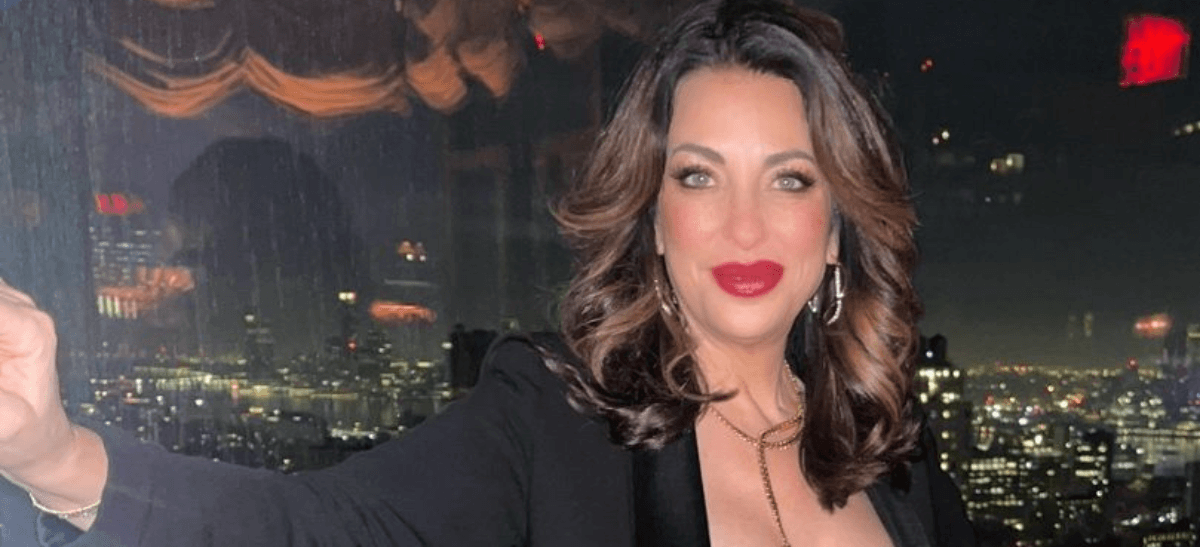
Shaina Nestor serves as Managing Partner and Director of Operations for Gibsons Restaurant Group. With a career grounded in restaurant operations and hospitality leadership, she focuses on developing people, strengthening restaurant culture, and ensuring that every element—from food and wine to service—contributes to an exceptional guest experience.
In this interview, Nestor discusses what makes a great sommelier, how suppliers can become valuable partners, the qualities of an effective wine program, and why hospitality should always be about relationships rather than transactions.
I currently serve as Managing Partner and Director of Operations for Gibsons Restaurant Group, where I oversee restaurant operations with a strong focus on leadership, team development, service standards, and the overall guest experience. My role involves working closely with our management and culinary teams to ensure we consistently deliver the level of hospitality our guests expect from Gibsons. I am passionate about developing people, building strong restaurant cultures, and creating memorable dining experiences where exceptional food, wine, service, and hospitality all come together.
My interest in becoming more knowledgeable about wine grew naturally through my career in hospitality. Wine is such an important part of the overall dining experience, and I have always been fascinated by how the right wine can elevate a meal, create conversation, and make an experience more memorable. As a restaurant leader, I wanted to deepen my knowledge so I could better support my teams, engage with our guests, and understand wine from both a hospitality and business perspective. For me personally, I enjoy wine as it is one of life’s great pleasures.
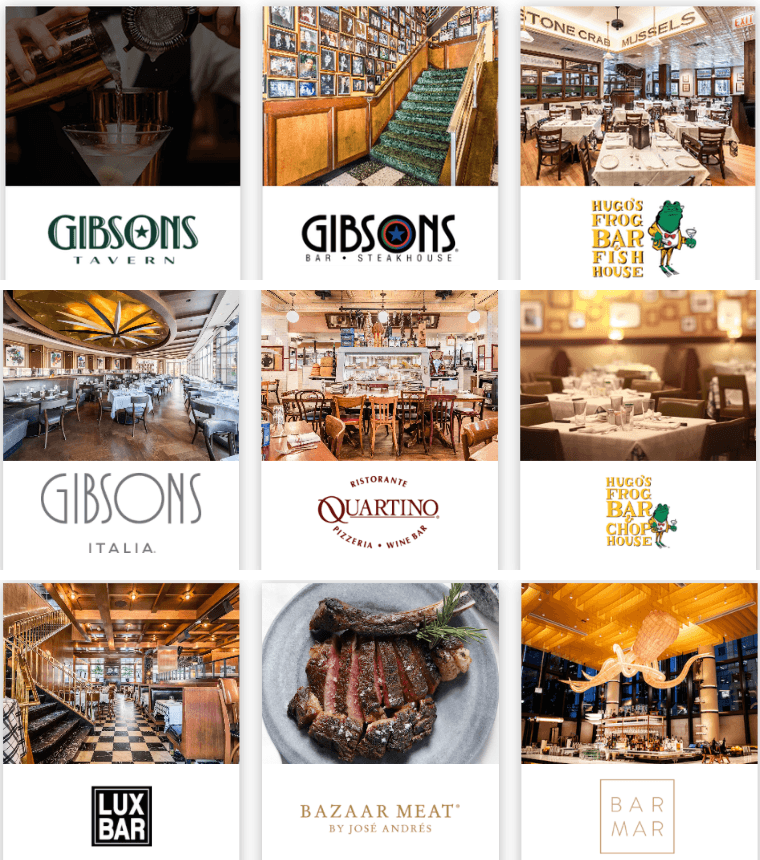
About Gibsons: Founded in 1989 with the iconic Gibsons Bar & Steakhouse on Rush Street, Gibsons Restaurant Group has been dedicated to providing unmatched hospitality, quality, and value to its customers. Gibsons Restaurant Group owns and operates these distinguished concepts: Gibsons Bar & Steakhouse, Hugo’s Frog Bar & Fish House, LUXBAR, Quartino Ristorante & Wine Bar, Gibsons Italia, The BOATHOUSE Orlando, Hugo’s Frog Bar & Chop House (on behalf of Rivers Casino), Bazaar Meat Chicago, and Bar Mar.
I would start by asking simple, approachable questions such as, “What do you normally like to drink?” or “Do you prefer something lighter and refreshing or richer and fuller-bodied?” I might also ask what they are planning to eat, whether they prefer red, white, rosé, or sparkling, and what price range they are comfortable with. Most importantly, I would make the conversation fun and unintimidating. You don’t need to know anything about wine to enjoy it—my job is to listen, learn what you like, and help you find something you’ll be excited to drink.
Some of the most important skills for a sommelier are knowledge, communication, listening, and above all, hospitality. A sommelier should have a strong understanding of grape varieties, regions, producers, vintages, food pairings, and proper wine service, but being able to translate that knowledge into a great guest experience is equally important.
A great sommelier knows how to read the table and ask the right questions without making a guest feel intimidated. They should be able to understand a guest’s preferences, occasion, food choices, and price point, and then confidently recommend a wine that fits the experience.
Communication and storytelling are also incredibly important. Wine has a story behind it, and sharing that story in an interesting and approachable way can make the experience much more memorable. Finally, a sommelier needs humility and curiosity. There is always more to learn in the world of wine, and the best sommeliers continue tasting, studying, listening, and evolving throughout their careers.
The first seven days are critical because they set the tone for how a new team member views the restaurant, our culture, and our expectations. I would begin with an introduction to our company values, hospitality philosophy, and service standards so they understand not only what we do, but why we do it.
From there, I believe strongly in hands-on training. I would have them shadow experienced team members, learn the menu and beverage program, taste key dishes and wines, and become comfortable with the steps of service and our approach to guest interaction. Each day should build on the previous one, with clear expectations, coaching, and opportunities to ask questions.
I would also check in with them personally throughout that first week. Training is not just about teaching procedures; it is about building confidence and making someone feel part of the team. By the end of seven days, I want a new employee to understand our standards, feel supported by their leaders and peers, and be excited about representing the restaurant and creating exceptional experiences for our customers.
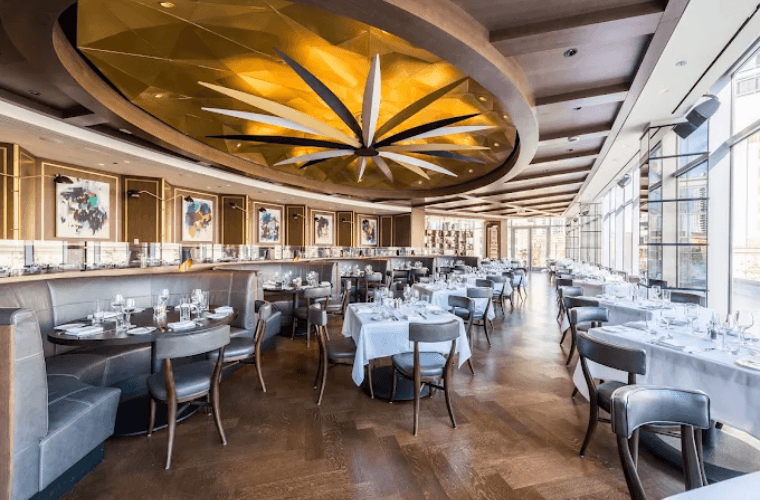
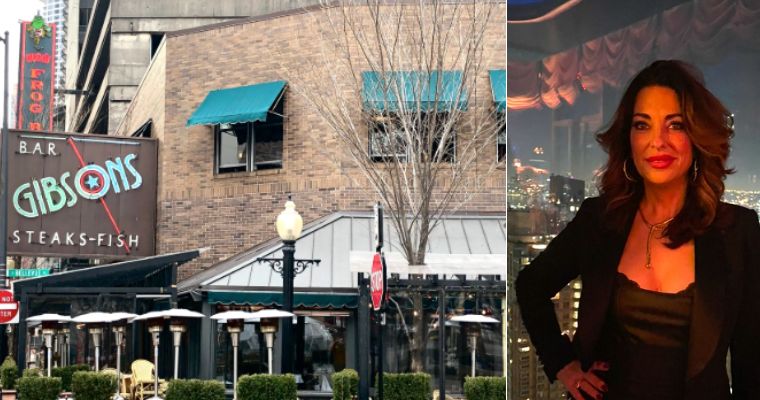
Gibsons Italia in picture.
I believe the most effective way to grow beverage sales is through education, engagement, and creating excitement around the beverage program. One of my biggest focuses is making sure the service team is knowledgeable and confident. We conduct tastings and pre-shift education so servers understand the wines, cocktails, and spirits they are recommending and can speak about them naturally rather than simply trying to “sell” something.
I also encourage the team to begin the beverage conversation early in the dining experience. For example, suggesting a glass of Champagne or a signature cocktail while guests are looking at the menu creates an immediate opportunity, followed by thoughtful wine recommendations that complement what they order. Offering wines at different price points and explaining why a particular bottle pairs well with the meal helps guests feel that the recommendation is personalized rather than sales-driven.
We also create excitement through seasonal cocktails, featured wines, special pours, and food-and-wine pairings. When we introduce a new or featured beverage, we have the staff taste it and give them a simple story and talking points they can comfortably share with guests.
These methods have resulted in stronger beverage sales because an educated and enthusiastic team creates more confident recommendations. My philosophy is that beverage sales grow organically when we focus first on enhancing the guest experience. When guests trust the recommendation and discover something they enjoy, they are more likely to order another glass, explore a bottle, and return for the experience again.
When looking to grow net profit, I first focus on the areas that can have the greatest impact without compromising the guest experience. I start by reviewing sales, labor, cost of goods, purchasing, waste, and product mix to identify where opportunities exist.
Labor efficiency is a major focus. I look closely at scheduling based on business levels and productivity while making sure we maintain the staffing necessary to deliver exceptional service. On the cost side, I work with our culinary and beverage teams to monitor purchasing, inventory, portioning, waste, and vendor pricing. Small improvements in these areas can have a significant impact over time.
I also believe increasing profitability is not simply about cutting costs. Growing revenue and improving margins are equally important. We focus on menu engineering, beverage sales, strategic pricing, private dining, and maximizing high-margin opportunities.
Most importantly, I involve the management team in understanding the financial performance of the restaurant. When leaders understand the numbers and how their daily decisions affect profitability, they become better operators. The goal is always to run a disciplined, efficient business while protecting the quality, hospitality, and experience that keep our guests returning.
I believe that in hospitality, you never stop learning. I improve my skills by staying curious, observing what other successful restaurants and hospitality brands are doing, attending industry events, networking with other leaders, and most importantly, listening to my teams and our guests. I also learn by dining out and paying attention to the details—service, wine and beverage programs, atmosphere, and the small touches that make an experience memorable. I enjoy leadership and hospitality books such as Setting the Table by Danny Meyer, Unreasonable Hospitality by Will Guidara, and The Culture Code by Daniel Coyle. I also enjoy podcasts such as Restaurant Unstoppable, The Restaurant Strategy Podcast, and Culinary Confidential with Christina Cates. I believe some of the best professional development comes from combining formal learning with real-world experience and continually asking, “How can we do this better, and does this improve the customer experience?”
The best part of my job is the people. I love developing teams, mentoring future leaders, and watching people grow in their careers There is something incredibly rewarding about helping someone recognize their potential and then seeing them succeed
I also love creating memorable experiences for our guests. Hospitality is about making people feel genuinely welcomed, cared for, and special. Whether it is celebrating a milestone, enjoying a great bottle of wine, or simply having an exceptional dinner, knowing that our team helped create that memory is extremely rewarding
What I enjoy most is bringing those two things together—building a team that is passionate about hospitality and giving them the tools and confidence to create experiences that keep our guests coming back
I believe elevating the guest experience is about creating memorable moments that feel natural, personal, and effortless. Great hospitality goes beyond excellent food and service—it is about understanding what each guest needs and making them feel genuinely cared for
1. Anticipating needs before the guest asks.
I train teams to observe and listen carefully. Whether it is recognizing that a guest is celebrating something special, noticing the pace they prefer, remembering a favorite wine, or simply knowing when to give them space, anticipating needs creates a level of hospitality that feels intuitive rather than transactional
2. Personalizing the experience
Every guest is different. I encourage my teams to learn something about the people at the table and use that information appropriately. A returning guest being welcomed by name, having their preferred table recognized, or being offered a wine based on something they enjoyed on their previous visit can turn a good dinner into a relationship.
3. Creating memorable moments
Elevating an experience does not necessarily mean giving something away. It can be a thoughtful wine recommendation, sharing the story behind a dish, introducing a guest to the chef or sommelier, recognizing a milestone, or simply providing exceptionally warm and genuine attention. Often, the smallest personalized gesture is what a guest remembers most
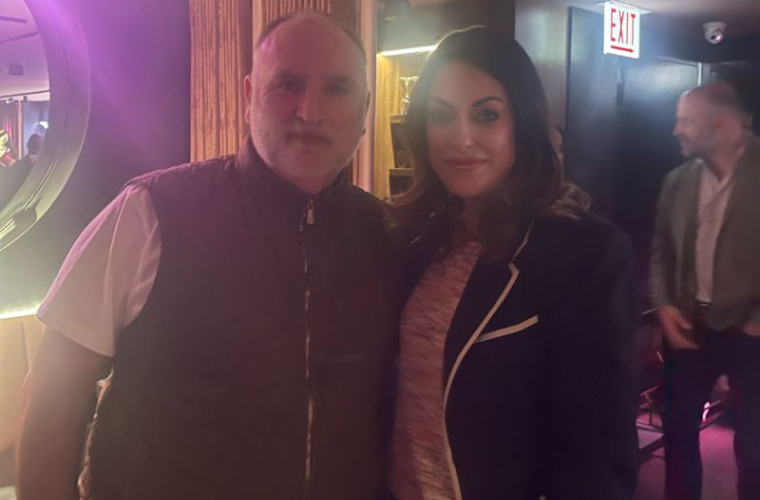
Chef Jose Andres and Shaina Nestor.
4. Empowering the team to recover an experience immediately
Things occasionally go wrong in restaurants. What matters is how quickly and sincerely we respond. I empower managers and staff to recognize disappointment, take ownership, and find an appropriate solution without making the guest work for it. A well-handled recovery can actually build greater loyalty than an experience where nothing went wrong
5. Building a culture where hospitality comes from everyone
Guest experience cannot depend solely on the server. From the host greeting a guest at the door to the bartender, support staff, culinary team, managers, and the final goodbye, every interaction matters. I spend significant time coaching teams to understand that they are not simply completing tasks—they are creating an experience. When that philosophy becomes part of the culture, guests can feel the difference
Loved The Bear because there was a lot of truth in restaurant operations. Also love shows on history. History can be more interesting than fiction!
One of the most unforgettable wine experiences of my life happened in the late 1990s at Picholine in New York City, where I had the privilege of attending a wine dinner with the Trimbach family.
Of course, the wines were exceptional. Experiencing the wines of Alsace alongside the family whose history and passion were behind every bottle was extraordinary. But what I remember most all these years later was not simply what was in the glass—it was the incredible warmth, generosity, and hospitality of the Trimbach family.
As the evening progressed, the entire room seemed to come together. There was wonderful food, beautiful wine, storytelling, laughter, and this incredible convivial spirit among everyone at the dinner. The formality that can sometimes surround fine wine disappeared completely. Wine became exactly what I believe it should be: something that connects people.
By the end of the evening, we were all singing a Trimbach song together. I can still remember that feeling today. Here I was at Picholine, surrounded by remarkable people, drinking exceptional wines, and singing with the Trimbach family. It was joyful, genuine, and completely unforgettable.
That evening has stayed with me throughout my career in hospitality.
More than 25 years later, I still consider it one of the most unforgettable dining experiences of my life.
I hesitate to call them faux pas, because I never want a guest to feel intimidated by wine. However, there are a few common mistakes or misconceptions that I see:
1. Ordering based solely on price or prestige
Some guests assume the most expensive or recognizable bottle must be the best choice. A great wine experience is really about finding the right wine for the guest, the food, the occasion, and their personal taste—not necessarily the highest priced bottle
2. Being afraid to ask questions
This may be the biggest one. Guests sometimes feel they are supposed to know wine vocabulary or understand an entire wine list. I would much rather have someone say, “I usually drink Cabernet, I like something full bodied, and I want to spend around $100. That gives us everything we need to start a great conversation
3. Believing there is only one “correct” pairing
Traditional pairing principles are valuable, but personal preference matters tremendously. If someone loves red wine and orders fish, my job is not to tell them they are wrong. My job is to find a red wine that complements their meal and makes them happy.
For me, the role of a sommelier is never to demonstrate how much we know. It is to use what we know to make the guest more comfortable, curious, and excited about wine
One of my favorite and most unexpected food and wine pairings is a buffalo-style bison carpaccio served with pickled celery, blue cheese, and buffalo wing sauce, paired with a beautiful Sauternes.
It sounds unconventional, but the combination is fabulous. The sweetness and acidity of the Sauternes balance the heat and tang of the buffalo sauce, while its richness stands up beautifully to the blue cheese. The pickled celery brings acidity and crunch, and the lean, delicate bison provides the perfect canvas for all of those bold flavors.
What I love most is taking a bite that has a little bit of everything—the bison, blue cheese, pickled celery, and spicy buffalo sauce—and then taking a sip of Sauternes. You get sweet, spicy, salty, tangy, and savory all at once, yet somehow everything comes into balance.
This is the kind of pairing I love introducing to guests because it challenges the idea that Sauternes belongs only with dessert. Great pairings do not always have to be traditional or obvious. Sometimes the unexpected combinations are the ones you remember long after the meal is over.
My favorite book is Unreasonable Hospitality by Will Guidara. What I love about the book is that its message reaches far beyond the restaurant industry. At its core, it is about making people feel seen, valued, and cared for—and I believe those principles can resonate in any business and in everyday life.
The idea of going beyond what is expected, paying attention to the smallest details, and finding opportunities to create meaningful moments has always resonated with me. It reinforces something I strongly believe: people may not remember every detail of an experience, but they will remember how you made them feel.
I think the world could use a little more “unreasonable hospitality”—in our restaurants, our businesses, our leadership, and simply in the way we treat one another. For me, hospitality is not just an industry. It is a way of thinking and a way of connecting with people.
At this stage in my career, my goal is not simply about achieving the next title—it is about continuing to grow the business, develop great people, and create restaurants that guests want to return to again and again. I have always believed that the success of the restaurant is my success.
Busy restaurants feed on themselves. There is an energy and excitement that comes from a full dining room, but you can never take that success for granted. It starts and ends with taking care of the guest. Every day we have to earn their loyalty all over again.
I invest in that goal by coming to work humble every single day, continuing to listen and learn, developing my teams, paying attention to what our guests are telling us, and constantly looking for ways to get better. No matter how successful a restaurant is, there is always an opportunity to improve.
Staying relevant is also incredibly important to me. Our industry continues to evolve, and great operators have to evolve with it while never losing sight of the fundamentals of hospitality. I want to continue learning, challenging myself and my teams, and finding new ways to create excitement for our guests.
Ultimately, I measure my own career success through the success of the restaurants and the people I lead. If the restaurants are thriving, our teams are growing, and our guests continue to choose us, then I am succeeding.
One of the customer stories I remember most actually goes all the way back to my very first job as a waitress. There was a couple who came in regularly who were known for being very particular. They required a lot of attention, had very specific requests, and definitely kept you running. Most of the other waitresses did not want to take their table, but I was always happy to have them. I realized that underneath all of their requests, they were genuinely very nice people who simply knew what they wanted.
Over time, we developed a relationship. I learned their preferences, understood what was important to them, and enjoyed taking care of them whenever they came in.
Eventually, they told me they were moving out of state. On one of their final visits, they handed me an envelope. Inside was money they wanted me to put toward my college education, along with their thanks for everything I had done for them over the years.
I will never forget how that made me feel. It wasn’t about the amount of money in that envelope—it was realizing that something I thought was simply part of doing my job had actually meant something to them. I had made a connection and built a relationship.
That experience taught me a lesson very early in my career that I still carry with me today: hospitality is never just about the transaction in front of you. It is about relationships. You never know how much a small act of kindness, patience, or extra effort can mean to someone.
That envelope made me feel like a million bucks, and all these years later, I still remember that couple. I think that says everything about the power of hospitality.
I believe the best supplier relationships have to be a two-way street. I love giving business to people who genuinely care about our success and understand the values we have as a company. The strongest vendor relationships are not simply about buying and selling products—they are true partnerships.
Our core values center around quality, hospitality, value, and family, and those are the same things we need to see reflected in our supplier relationships. Ultimately, everything we purchase has to allow us to pass those values along to our guests.
Suppliers can help drive sales by understanding our restaurants and our customers, bringing us products that are both exciting and relevant, educating our teams, helping us create unique programming and experiences, and working collaboratively with us to find opportunities that make sense for both sides.
I also value suppliers who show up—not only when they are trying to sell something, but when we need support, education, creative ideas, or solutions. In return, when a supplier is invested in us and consistently delivers quality, value, and partnership, I want to invest in them.
The relationship we have with our vendors should mimic the relationship we want to have with our guests: built on trust, consistency, hospitality, value, and a genuine desire for each other to succeed. When that relationship works, everybody wins—the supplier, the restaurant, our team, and most importantly, the guest.
One of the best wine programs I have experienced was at my first job in New York City, Windows on the World. I was fortunate to be exposed very early in my career to an extraordinary wine culture, including Kevin Zraly and an incredibly knowledgeable wine team.
What impressed me most was not simply the depth of the wine list, but how thoughtfully it was organized for the guest. It was the first time I had seen wines within categories listed from lightest to fullest-bodied. That may sound simple, but it was brilliant. It gave the service team an intuitive way to understand the wines and made it much easier to have a conversation with a guest about what they actually enjoyed drinking.
They also understood that not every guest wanted to navigate a large, leather-bound wine book. Alongside the extensive list, there was a shorter, more approachable selection featuring many of the wines guests were most likely to be looking for. You could be a serious wine enthusiast and dive deeply into the full list, or you could simply want a great bottle with dinner and find one without feeling overwhelmed.
That experience taught me something I have carried throughout my career: a great wine program is not defined by how many bottles you have or how impressive the list looks. It is defined by how successfully you connect the guest with a wine they are going to enjoy.
Windows on the World had tremendous wine knowledge behind it, but it was also incredibly customer-focused and approachable. I learned an enormous amount there, and many of the principles I was exposed to early in my career still influence how I think about wine programs and hospitality today.
The Guest. Everything starts with the guest. Are they happy? Are we anticipating their needs? Are we delivering the quality, value, and hospitality they came to us for? I never want success or a busy restaurant to make us complacent. We have to earn the guest every single day.
Our People. I spend a tremendous amount of time developing and supporting our teams. I want people to feel valued, challenged, and proud of where they work. When you take care of your people, they are much better equipped to genuinely take care of your guests.
The Business. Great hospitality and strong financial performance have to work together. Every day I am looking at sales, labor, costs, beverage performance, profitability, and opportunities for growth. My responsibility is to protect both the guest experience and the health of the business.
Getting Better. I believe you have to walk in humble every day. No matter how successful yesterday was, there is always something we can improve today. I ask questions, listen to our guests and teams, stay aware of what is happening in our industry, and continually look for ways to remain relevant.
If we take care of our guests, develop our people, protect the business, and never stop trying to improve, everything else tends to follow.
When selecting a new wine for the program, I look at several things: quality, value, relevance, versatility, and what our customers actually want to drink.
Quality and Value. The wine has to deliver for the price. Value does not necessarily mean inexpensive—it means the customer should feel that what is in the glass or bottle is worth what they are paying for it.
Current Trends. I pay close attention to what is happening in the wine world and what customers are becoming interested in. Drinking habits change, regions gain momentum, new varietals become more familiar, and styles evolve. A strong wine program has to stay current and relevant without simply chasing every trend.
Our Customer. I always think about who is sitting in our restaurants. What are they ordering? What price points are comfortable for them? What are they asking for that we may not currently have? The wine list should be built around the customer rather than around what we think will impress other wine professionals.
What I Personally Like to Drink. I believe I am a prime target of our customer base, so I absolutely want wines on the list that I would be excited to order myself. I trust my own palate and instincts as a customer, while still making sure the list offers enough diversity to appeal to many different tastes.
Balance and Purpose. Every wine should have a reason for being on the list. I look at how it fits with our food, whether it fills a gap, how it complements the rest of the selection, and whether the team can confidently sell it.
Ultimately, I want a wine program that is exciting but approachable. It should reflect what is happening in the market while staying true to who we are at Gibsons Restaurant Group. Most importantly, it should give our customers wines they genuinely want to drink.
A great sommelier certainly needs strong wine knowledge, but for me, knowledge is only the beginning. When I am hiring a sommelier, I am looking just as closely at hospitality, approachability, emotional intelligence, salesmanship, and the ability to read the customer.
Hospitality. First and foremost, you have to genuinely enjoy taking care of people. The role is not about demonstrating how much you know about wine. It is about using that knowledge to enhance the customer’s experience.
The Ability to Read the Customer. A great sommelier knows when a customer wants to have an in-depth conversation about Burgundy and when they simply want a delicious bottle of wine at a comfortable price point. Being able to recognize that difference is incredibly important.
Approachability. Wine can be intimidating, and a sommelier should never make a customer feel uncomfortable about what they know—or don’t know. I look for someone who can take complicated wine knowledge and communicate it in a way that is warm, simple, and engaging.
Curiosity and Humility. The wine world is enormous, and nobody ever knows everything. The best sommeliers I have worked with are constantly tasting, reading, asking questions, and learning. They are confident in their knowledge but humble enough to know there is always more to discover.
Ultimately, I look for someone who understands that the wine is there to serve the experience—not the other way around. If the customer leaves happy, remembers the wine, trusts your recommendation, and wants to come back, then you have done your job exceptionally well.
When I evaluate the effectiveness of a wine program, I look at both the numbers and what our customers are telling us. Customer growth, sales performance, repeat business, and customer feedback are all important indicators.
Customer Growth and Cover Counts. One of the strongest measures for me is whether more people are coming through the door. When cover counts are growing and customers continue to return, it tells me that our overall offerings are resonating with them. The wine program is an important part of that experience.
Sales and Product Mix. I look at beverage sales, wine sales per customer, bottle versus by-the-glass performance, price points, and which wines are actually moving. A wine list can look incredible on paper, but ultimately the customer has to want to drink what we are offering.
Customer Feedback. I believe strongly in talking to customers. I want to know what they are drinking, what they love, what they are asking for, and what keeps bringing them back. Some of the most valuable information I receive does not come from a report—it comes from conversations in the dining room.
Repeat Business. I also pay attention to what customers reorder. When someone comes back specifically looking for a wine they discovered with us, or trusts us enough to ask for another recommendation, that tells me we are building a relationship rather than simply making a sale.
Ultimately, an effective wine program should be financially successful, approachable, relevant, and continually evolving with the customer. When cover counts are growing, wine sales are strong, and customers are excited about what we are offering and keep coming back, those are some of the best indicators that the program is working.
Shaina Nestor is a judge for the 2027 Sommeliers Choice Awards. If you are a winery or wine importer looking to get your wines in front of buyers and decision-makers like Shaina Nestor, then Sommeliers Choice Awards gives you a perfect opportunity.
The 2027 entrants will now get comprehensive, detailed feedback on each entry, and it will include feedback like…
Also Read:
First Round of Judges Announced for the 9th Sommeliers Choice Awards
Sommeliers Choice Awards Launches Exclusive On-Premise Buyer Intelligence Report For Entrants
More Feedback and Transparency For Entrants At The Sommeliers Choice Awards
Enter the 2027 Sommeliers Choice Awards for expert evaluation from sommeliers and on-premise wine buyers. Receive detailed scores, practical feedback on how to improve, market and sell your wines, and see who judged them—with insights into channel fit and serving suggestions.